Product List

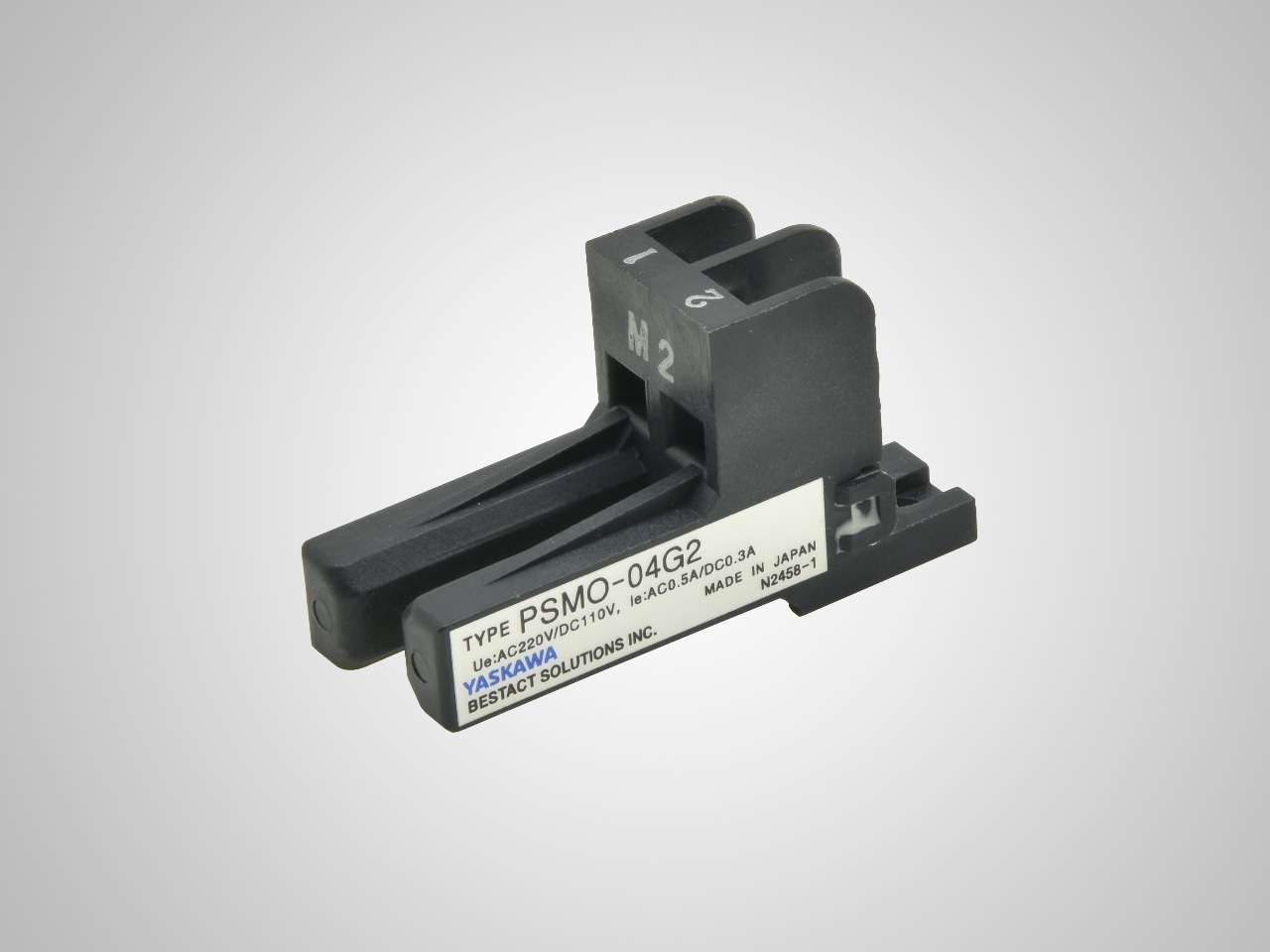
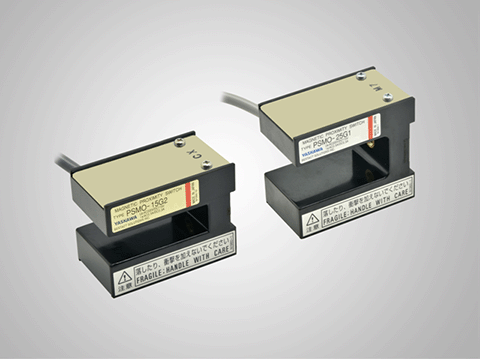
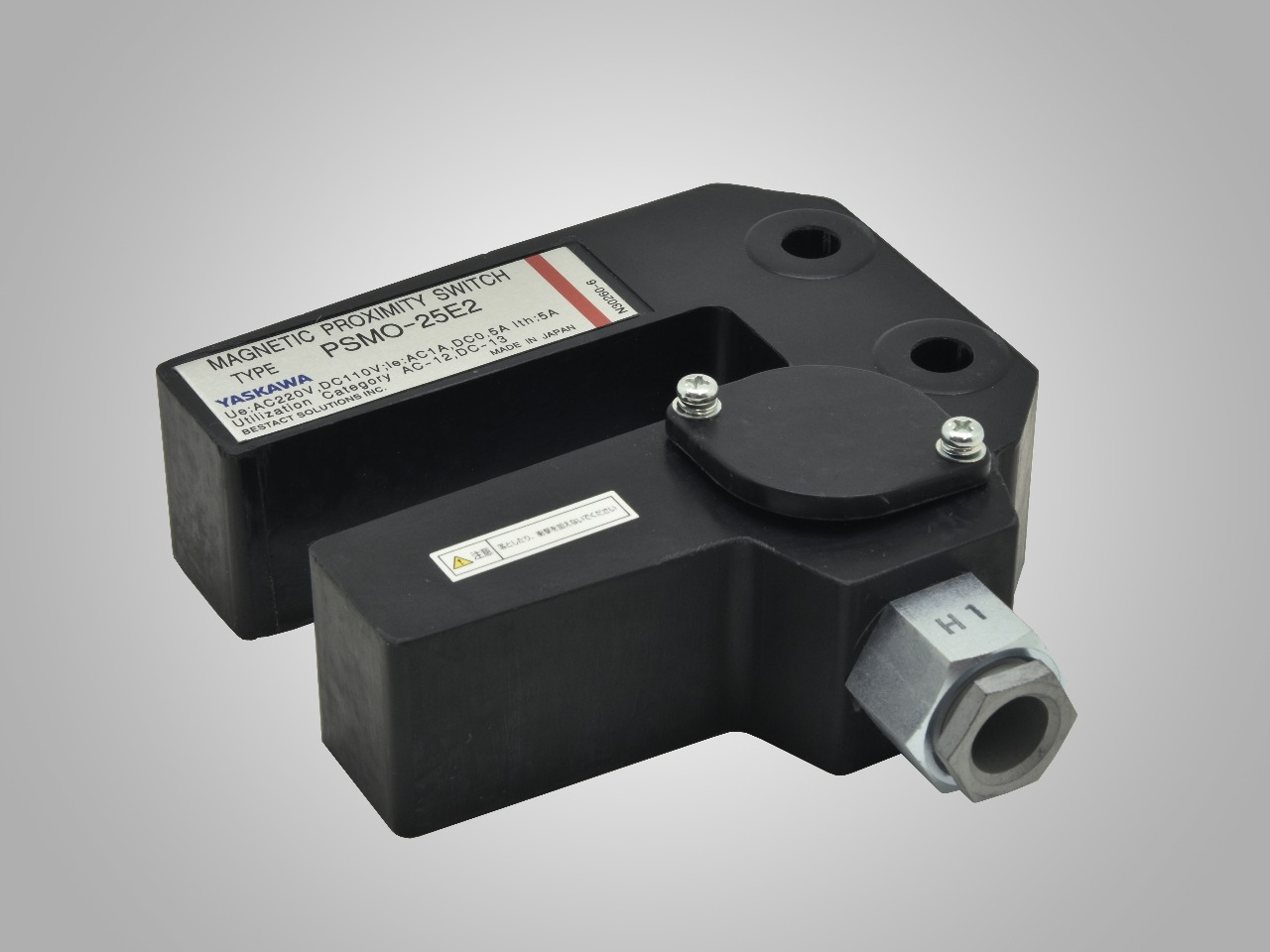
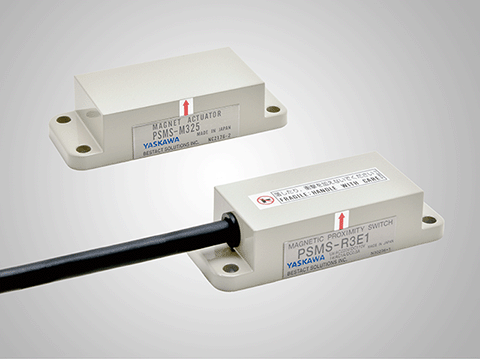
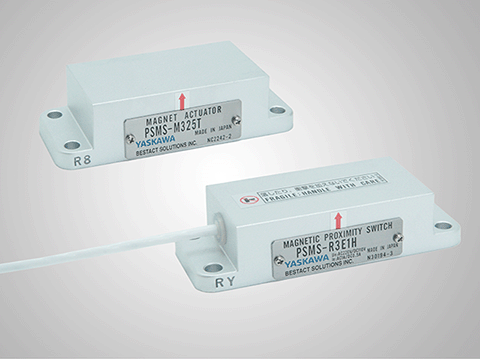
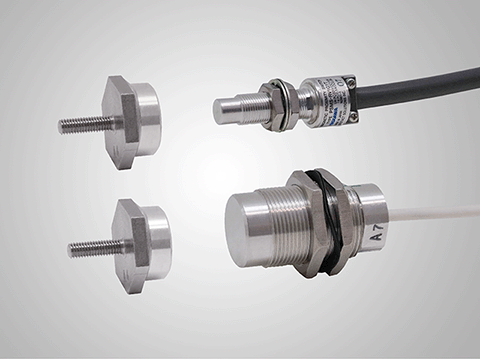
Choose the magnetic proximity switch type that best fits your installation and sensing requirements.

The "medium capacity type" and "large capacity type" representing the contact capacity indicate that Bestact R25 and R15 are to be incorporated.

What Is a Magnetic Proximity Switch?

Definition of magnetic proximity switch (sensor)

A magnetic proximity switch outputs a signal depending on the presence or absence of an object that causes a change in the magnetic field within the detection area without contacting the object. The built-in sensing element can be a reed switch with mechanical contacts, a Hall element using the Hall effect, or a magnetoresistive element whose electrical resistance changes in response to a magnetic field. Power Reed Switches (Bestact), which have a unique structure, are used as the sensing element in the magnetic proximity switches we manufacture.

Operating principle of magnetic proximity switches (sensors)

When a magnet approaches the switch, the reed switch inside the unit responds to the magnetic field. As shown in the figure below, when the magnet is close to the switch, the contacts operate. Conversely, when the magnet is separated from the switch, the magnetic field applied to the switch decreases and the contacts return to their normal state.
Movement of contacts due to magnetism
The switch is available with either a Normally Open (NO) contact or a Normally Closed (NC) contact. An NO contact remains open under normal conditions and closes when a magnetic field is detected. In contrast, an NC contact remains closed under normal conditions and opens when a magnetic field is detected. The energized and de-energized states of the NC contact are opposite to those shown in the figure above.

Types and Usage of Magnetic Proximity Switches (Sensors)

Magnetic proximity switches can be broadly classified into two types: those in which the switch and magnet are integrated, as typified by the vane type, and those in which they are separated.

In the vane type, the switch and magnet are integrated into a single assembly.
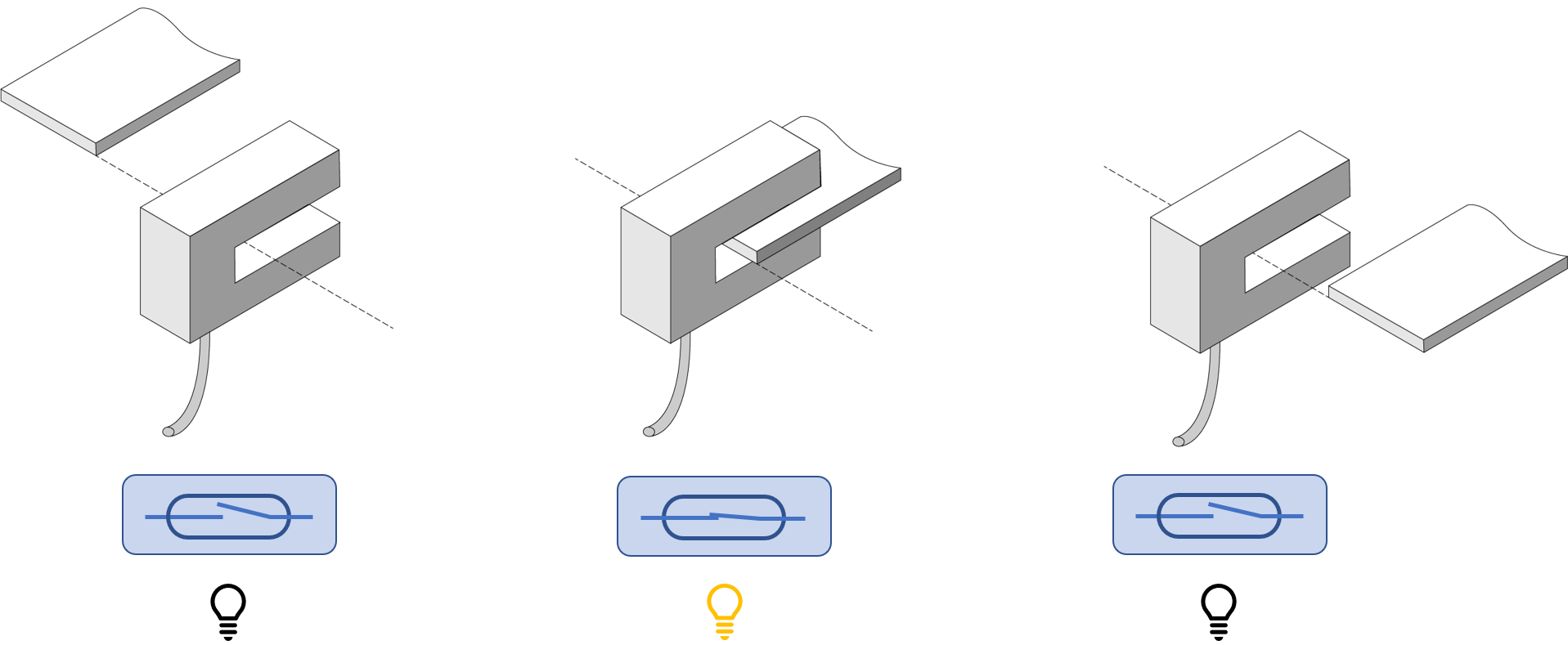
Switching occurs when a flat plate-shaped sensing element (ferromagnetic material: iron plate, etc.) passes through the U-shaped groove. The detection is made by shielding the magnetic path formed by the intrusion of the detecting body between the magnet and the reed switch, which are arranged in the form of a groove. As mentioned above, when the switch is a b-contact, the following reed switch energized/disconnected states caused by the proximity of the sensing body are reversed.
Vane type operation

Separate switch and magnet type (separate type, cylindrical type, memory type)
The switch is fixed and the magnet is attached to the moving object. Switching occurs when the magnet approaches or passes through the switch. Separate-type, cylindrical-type, and memory-type models are also available, as shown in the figure below, cylindrical type switches, and memory type switches that retain the ON state after the magnet passes through. The operating principle is the same, but the direction in which the magnet passes through is specified by each product. As mentioned above, when the switch is a NC contact, the following reed switch energized/disconnected states caused by the proximity of the sensing object are reversed.
セパレート型動作

How to Select a Magnetic Proximity Switch

The main performance factors to check when selecting a magnetic proximity switch suitable for the installation environment are the sensing distance, electrical specifications, and applicable ambient temperature.

The sensing distance refers to the distance between the sensing surface of the switch and any surface of the magnet. Since the size of the magnet is related to the strength of the magnetism, it is necessary to select a set of switch and magnet that satisfies the sensing distance. In addition, there is hysteresis, which is the difference between the operating point and the return point of the switch. Therefore, it is necessary to check the detection distance expressed in the operating characteristics of the product specifications.

The electrical specifications depend on the performance of the built-in contacts. Select a switch after confirming the rated operating current.
Below are the contact ratings of the aforementioned Power Reed Switch (Bestact).

Contact performance
Bestact typeR25R15Notes
Rated operating currentAC220V 0.5A220V 1Ainductive load(50/60Hz)
DC110V 0.3A110V 0.5A , 220V 0.2Ainductive load(R25:L/R=40ms R15:L/R=100ms)

The ambient temperature is the temperature range in which the switch can be operated without any problem. It depends on the temperature range of the resin used to fill the switch and magnet, and the temperature range of the case that covers the switch and magnet. The high-temperature switches we handle can operate up to 130°C.


Applications of Bestact Magnetic Proximity Switches

Bestact magnetic proximity switches utilize highly reliable reed switch technology designed for long service life and dependable operation. By reducing maintenance requirements and replacement frequency, they help lower operating costs in a wide range of industrial applications, including steel production facilities and elevator systems.

Steel Industry Applications

Learn how Bestact magnetic proximity switches are used throughout the steel manufacturing process, from raw material handling to production lines. Explore typical installation points and recommended products for harsh industrial environments.
Learn More

Elevator Applications

Learn how Bestact magnetic proximity switches are applied in elevator and lift systems. Learn about key installation points, application benefits, and recommended products for reliable position detection and safe operation.
Learn More